Electric vehicles are growing rapidly across the world. More companies are investing in electric mobility every year. As a result, the demand for EV components manufacturing is increasing quickly.
Electric vehicles need strong and lightweight parts. These components help improve battery performance, safety, and energy efficiency. Therefore, manufacturers now focus on advanced production methods such as aluminium pressure die casting and precision machining.
Today, companies like Sheetal Metals support modern industries with aluminium manufacturing solutions for industrial and EV applications.
Why EV Components Manufacturing Matters
Electric vehicles use many precision-engineered components. Every part must perform well under heat, pressure, and continuous use.
Traditional vehicle parts are often heavier. However, electric vehicles require lightweight structures to improve battery range and efficiency.
This is why aluminium EV components are widely used in:
- Battery housings
- Motor covers
- Heat sinks
- EV charger enclosures
- Converter housings
- Cooling systems
These parts must provide strength, durability, and long-term reliability.
Why Aluminium Is Used in EV Components
Aluminium is one of the most important materials in the EV industry. It offers several advantages for modern vehicle manufacturing.
Lightweight Performance
Weight reduction is very important in electric vehicles. Heavy components reduce battery efficiency and driving range.
Aluminium helps manufacturers:
- Reduce vehicle weight
- Improve battery performance
- Increase driving range
- Improve energy efficiency
Because of these benefits, aluminium components are becoming more common in electric vehicles.
Better Heat Dissipation
Electric vehicles generate heat during operation. Batteries and electronic systems must stay cool for safe performance.
Aluminium transfers heat quickly and efficiently. Therefore, manufacturers use it for:
- Heat sinks
- Battery cooling systems
- Electronic enclosures
- Charger components
Manufacturers such as Sheetal Metals use aluminium manufacturing processes that support thermal management and industrial performance.
Corrosion Resistance
EV components often work in outdoor environments. Aluminium offers strong resistance against corrosion and moisture.
As a result, components last longer and require less maintenance.
Role of Pressure Die Casting in EV Manufacturing
Pressure die casting is widely used in EV components manufacturing.
In this process, molten aluminium is injected into steel dies under high pressure. This method produces accurate and durable components with smooth surface finishes.
Benefits of Pressure Die Casting
Fast Production
Electric vehicle manufacturers require high production volumes. Pressure die casting supports fast and efficient manufacturing.
High Accuracy
EV systems require precision-engineered components. Pressure die casting helps maintain tight tolerances and dimensional consistency.
Complex Designs
Modern EV parts often contain thin walls and complex shapes. Pressure die casting supports advanced component designs with excellent accuracy.
Lower Material Waste
The process reduces material waste and improves manufacturing efficiency. Consequently, production costs become more manageable.
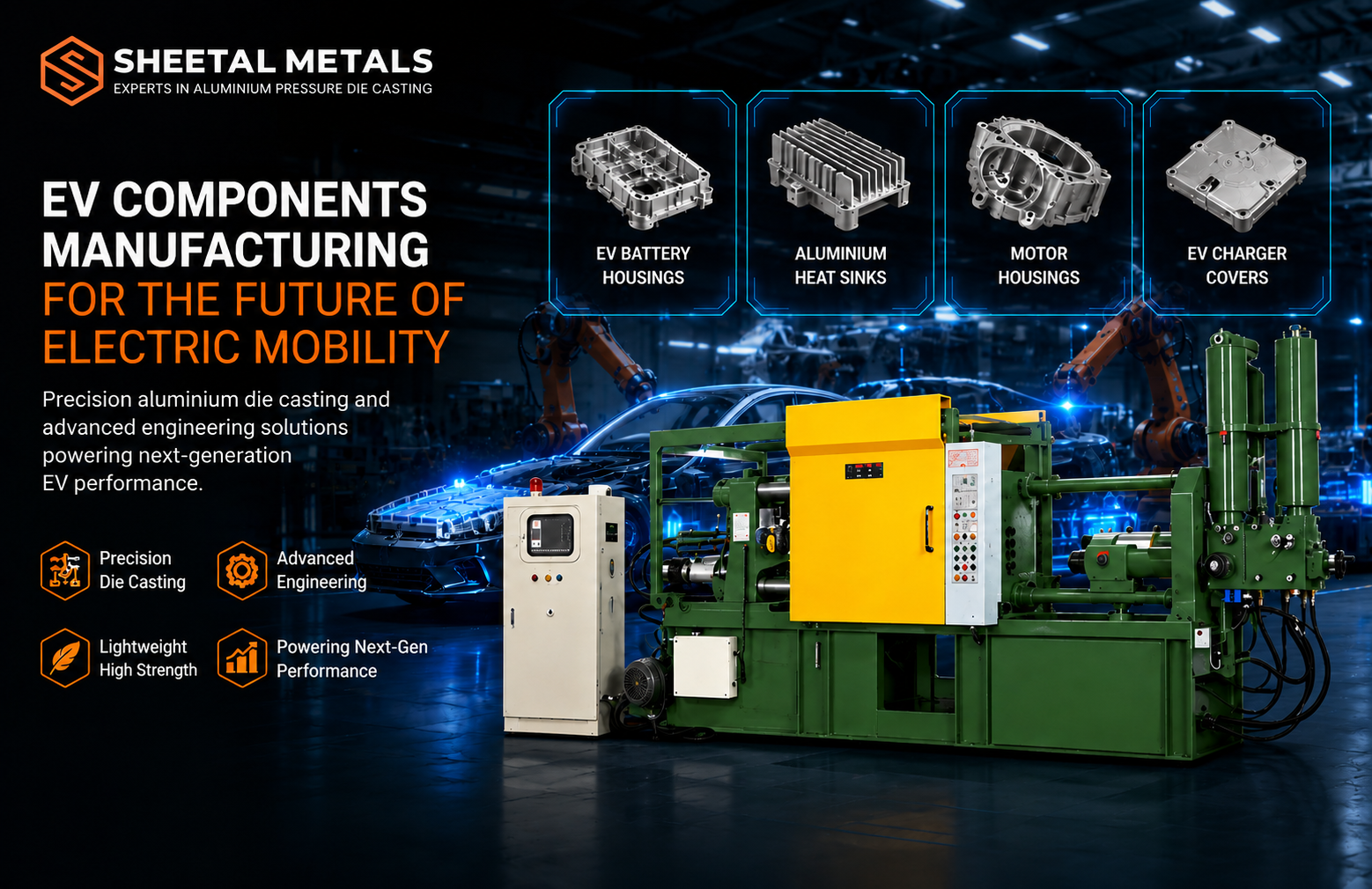
Common EV Components Manufactured Using Aluminium
Battery Housing Components
Battery housings protect battery systems from heat, vibration, and impact. These components must remain lightweight and durable.
Heat Sinks
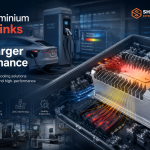
Heat sinks control heat generated by EV electronics. They help improve electrical performance and system reliability.
Motor Housing Components
Motor housings protect internal motor systems and improve thermal stability. These parts require high dimensional accuracy.
EV Charger Components
Charging systems need strong and heat-resistant enclosures. Aluminium die casting helps produce reliable charger covers and converter housings.
Importance of Precision Machining
Many EV components require machining after die casting. Precision machining improves:
- Surface accuracy
- Hole positioning
- Component fitment
- Product performance
CNC and VMC machining processes help manufacturers achieve high precision.
Integrated manufacturing companies like Sheetal Metals combine die casting and machining operations to maintain consistent product quality.
Surface Finishing in EV Components
Surface finishing improves both durability and appearance. It also increases resistance against corrosion and environmental exposure.
Common finishing methods include:
- Powder coating
- Shot blasting
- Surface treatment
- Polishing
Powder coating is widely used because it provides:
- Long-lasting protection
- Better surface finish
- Improved durability
These processes help improve component life in demanding industrial environments.
Quality Control in EV Components Manufacturing
Quality control is extremely important in EV manufacturing. Small dimensional errors can affect vehicle performance and safety.
Manufacturers perform several inspections, including:
- Dimensional testing
- Material inspection
- Surface checking
- Leak testing
- Thermal testing
Advanced manufacturing companies also use modern inspection systems to maintain consistent quality standards.
Future of EV Components Manufacturing
The future of EV manufacturing looks very strong. Demand for lightweight aluminium components will continue increasing as electric vehicle adoption grows worldwide.
Several trends are shaping the industry:
- Lightweight vehicle structures
- Advanced cooling systems
- High-performance battery housings
- Automated manufacturing
- Smart production technologies
Manufacturers that invest in advanced engineering and precision production will gain long-term advantages.
Conclusion
EV component manufacturing is becoming one of the most important sectors in modern industrial production. Electric vehicles require lightweight, durable, and thermally efficient components for better performance and reliability.
Aluminium pressure die casting, precision machining, and advanced finishing processes help manufacturers meet these growing demands. Companies like Sheetal Metals continue supporting industrial manufacturing with aluminium engineering and precision production solutions.
As electric mobility continues to grow, the demand for high-quality EV components will increase significantly in the coming years.
📅 Last updated: