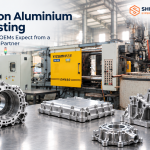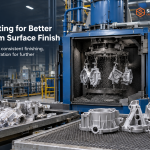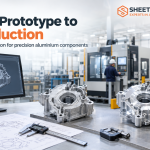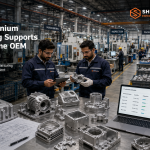
A proven solution for producing complex aluminium components with exceptional quality and consistency.
Manufacturing is becoming more demanding every year.
Companies need parts that are strong, lightweight, and accurate. They also need to produce these parts quickly and at a competitive cost.
This is where aluminium pressure die casting stands out.
It is one of the most efficient manufacturing processes available today. It helps manufacturers produce large volumes of high-quality aluminium components with excellent consistency.
That is why industries such as electric vehicles, automotive, electronics, lighting, and industrial equipment depend on this process every day.
Manufacturers like Sheetal Metals use aluminium pressure die casting to produce precision components that meet modern industry standards.
But what makes this process so popular?
Let’s look at the seven biggest benefits.
What Is Aluminium Pressure Die Casting?
Aluminium pressure die casting is a process used to manufacture metal parts.
In this method, molten aluminium is injected into a steel die under high pressure.
The metal fills the mold quickly and takes the exact shape of the component.
After cooling, the part is removed and prepared for finishing.
The process is fast, accurate, and highly repeatable.
Because of this, it is widely used for large-scale production.
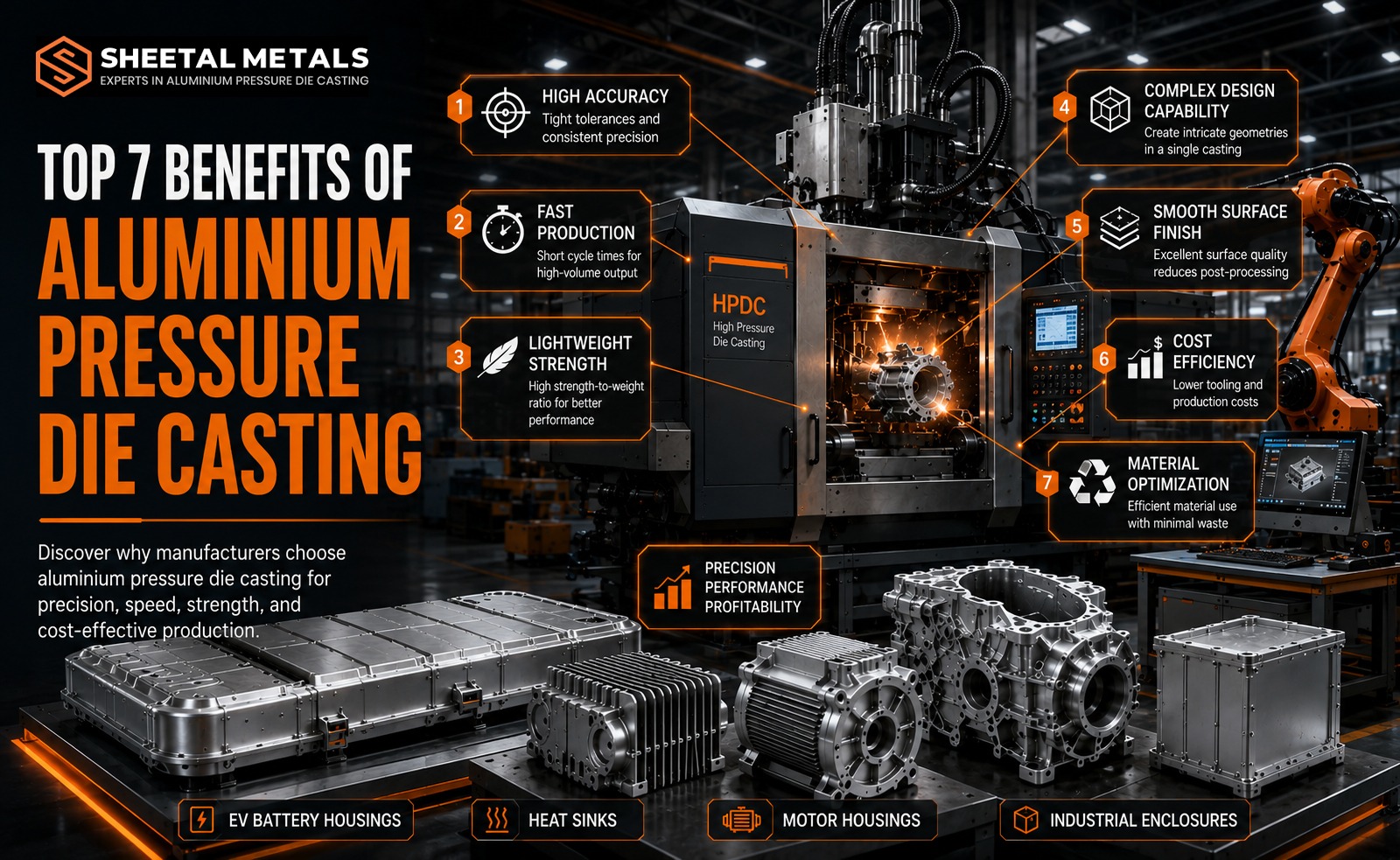
1. High Accuracy and Consistent Quality
Accuracy is critical in manufacturing.
A small error in a component can create problems during assembly. It can also affect the performance of the final product.
Pressure die casting helps avoid these issues.
The high-pressure injection process fills the mold with precision. This allows manufacturers to produce components with consistent dimensions.
The benefits include:
- Better fit and assembly
- Improved product performance
- Fewer production errors
- Consistent quality in every batch
This is especially important for EV, automotive, and electronics applications.
2. Faster Production
Speed is one of the biggest reasons manufacturers choose pressure die casting.
Once the die is ready, production can run continuously.
Thousands of components can be produced in a short period.
This helps manufacturers:
- Increase output
- Meet delivery deadlines
- Reduce production time
- Improve efficiency
For high-volume manufacturing, few processes can match the speed of pressure die casting.
3. Lightweight Components with Excellent Strength
Modern products need to be lighter than ever.
At the same time, they must remain strong and durable.
Aluminium provides both advantages.
It offers excellent strength while keeping weight low.
This helps improve:
- Vehicle performance
- Battery efficiency
- Energy savings
- Product durability
This is one reason aluminium is widely used in electric vehicles and advanced industrial equipment.
4. Greater Design Freedom
Modern products often have complex designs.
Many components include detailed features, thin walls, and precise shapes.
Pressure die casting makes these designs easier to manufacture.
The process can create:
- Thin-wall components
- Complex geometries
- Detailed surface features
- Integrated designs
As a result, engineers have more flexibility during product development.
In many cases, multiple parts can even be combined into a single component.
This reduces assembly time and improves efficiency.
5. Smooth Surface Finish
Surface quality matters.
A smoother surface improves appearance and often improves performance.
Pressure die casting naturally produces components with a clean finish.
This offers several advantages:
- Better appearance
- Easier powder coating
- Easier painting
- Lower finishing costs
Because the surface is already smooth, less post-processing is required.
This saves both time and money.
6. Lower Cost for Large Production Runs
Many manufacturers look at the long-term cost of production.
Pressure die casting requires an initial investment in tooling.
However, the process becomes highly economical at higher volumes.
The reasons are simple:
- Faster production
- Lower labor requirements
- Reduced waste
- Consistent quality
As production volume increases, the cost per component decreases.
This makes pressure die casting an excellent choice for large manufacturing projects.
7. Better Material Efficiency
Material efficiency is becoming increasingly important.
Manufacturers want to reduce waste and improve sustainability.
Pressure die casting supports both goals.
The process uses controlled amounts of molten aluminium during each cycle.
Excess material can often be recycled and reused.
This helps achieve:
- Lower material costs
- Reduced waste
- Better resource utilization
- More sustainable production
These advantages benefit both manufacturers and the environment.
Where Is Aluminium Pressure Die Casting Used?
The process supports many industries.
Common applications include:
Electric Vehicles
- Battery housings
- Heat sinks
- Motor housings
- Charger enclosures
Automotive
- Engine components
- Structural parts
- Cooling system components
Electronics
- Heat management components
- Protective housings
- Industrial enclosures
Lighting
- LED housings
- Outdoor lighting components
- Industrial lighting systems
Industrial Equipment
- Pump housings
- Machinery components
- Engineering products
How Sheetal Metals Supports Modern Manufacturing
Manufacturing success depends on quality, precision, and reliability.
Sheetal Metals supports modern industries through aluminium pressure die casting, machining, and finishing capabilities.
By combining these processes under one roof, the company helps manufacturers receive high-quality components with consistent performance and dependable production standards.
Conclusion
Aluminium pressure die casting has become a preferred manufacturing process for good reason.
It delivers accuracy, speed, strength, design flexibility, and cost efficiency.
It also helps manufacturers produce large volumes of components while maintaining consistent quality.
As industries continue to demand lightweight and high-performance products, aluminium pressure die casting will remain a key technology for modern manufacturing.
For businesses seeking reliable aluminium components, the process offers a proven path to quality, efficiency, and long-term value.
📅 Last updated: