What Is Aluminium Pressure Die Casting? A Complete Guide for Modern Manufacturing
Manufacturers today need components that are strong, lightweight, and accurate. They also need a process that can produce thousands of parts with consistent quality. This is where aluminium pressure die casting becomes important.
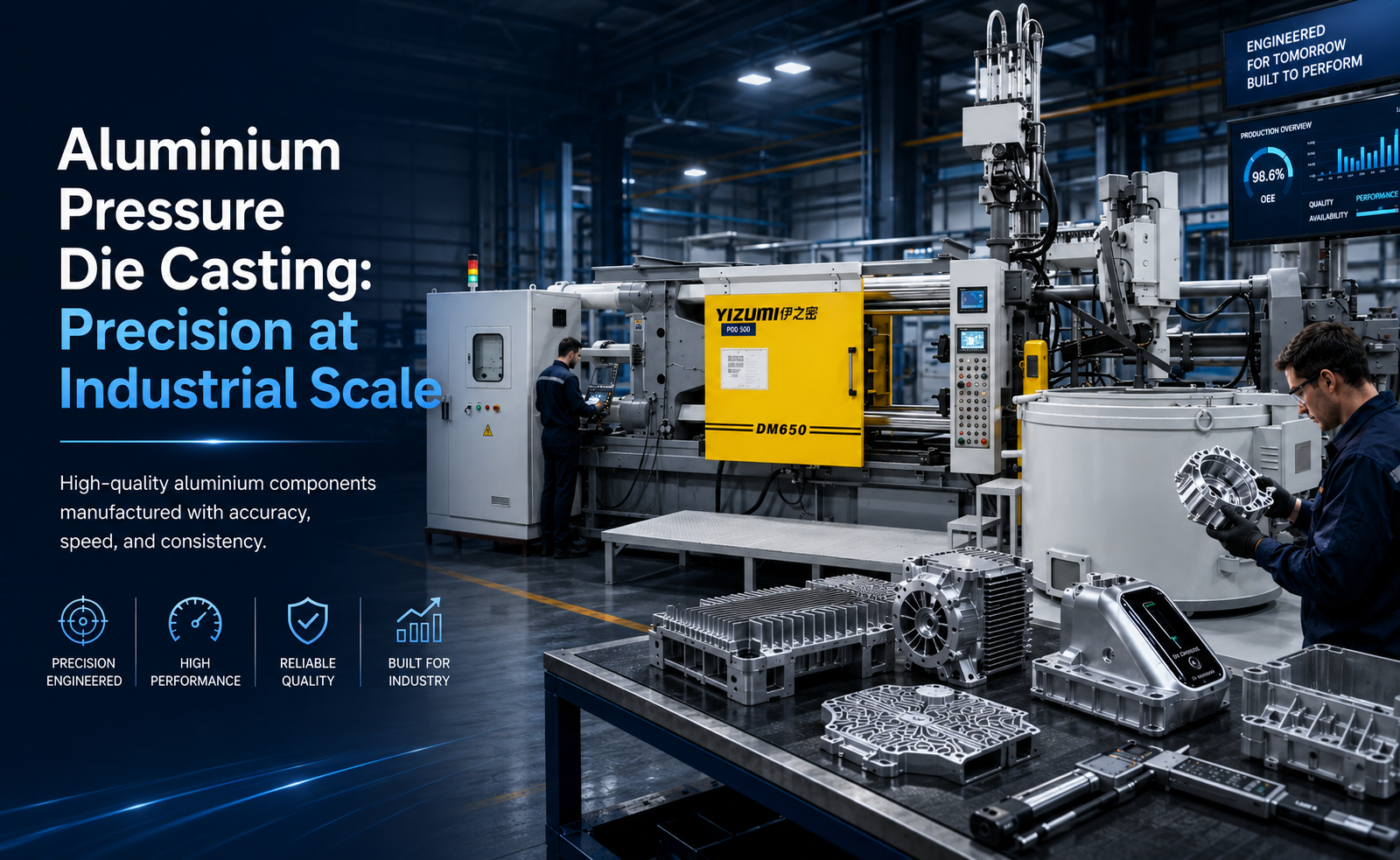
Aluminium pressure die casting is one of the most widely used manufacturing processes in the world. It helps produce complex metal components with high precision and excellent surface quality. The process is fast, reliable, and suitable for large-scale production.
Many industries depend on this technology. These include electric vehicles, automotive, electronics, lighting, renewable energy, and industrial equipment. As demand for lightweight and durable components continues to grow, pressure die casting is becoming even more important.
Companies such as Sheetal Metals use advanced die casting technology to manufacture aluminium components for a wide range of industrial applications.
What Is Aluminium Pressure Die Casting?
Aluminium pressure die casting is a manufacturing process that creates metal components by forcing molten aluminium into a steel mold under high pressure.
The steel mold, also called a die, contains the shape of the final component. Molten aluminium fills the die cavity and quickly takes its shape. Once the metal cools and solidifies, the component is removed from the die.
This process is commonly known as High Pressure Die Casting or HPDC.
Because the process is highly accurate, manufacturers can produce large volumes of identical components with minimal variation.
How the Die Casting Process Works
The pressure die casting process follows a series of controlled steps.
Step 1: Die Preparation
The process begins with die preparation. The steel die is cleaned and lubricated before production starts.
This preparation helps improve component quality and ensures smooth removal of the finished part.
Step 2: Aluminium Melting
Aluminium is melted inside a furnace at a controlled temperature.
Once the metal reaches the required condition, it is transferred to the die casting machine.
Step 3: High-Pressure Injection
The molten aluminium is injected into the die cavity under high pressure.
This pressure forces the metal into every section of the mold. As a result, the final component achieves excellent dimensional accuracy.
Step 4: Cooling and Solidification
The aluminium cools rapidly inside the die.
During this stage, the material solidifies and takes the exact shape of the component.
Step 5: Ejection and Finishing
After cooling, the die opens, and the finished component is removed.
The part may then go through trimming, machining, finishing, and inspection before delivery.
Why Aluminium Is Used for Die Casting
Aluminium offers several advantages that make it ideal for modern manufacturing.
Lightweight Properties
Weight reduction is important in many industries.
Lighter components improve performance, reduce energy consumption, and increase efficiency.
This is especially important for:
- Electric vehicles
- Automotive systems
- Industrial equipment
- Consumer electronics
High Strength
Aluminium provides excellent strength while maintaining a low weight.
This combination helps manufacturers create durable components without adding unnecessary mass.
Corrosion Resistance
Many products operate in challenging environments.
Aluminium naturally resists corrosion and moisture damage. Therefore, components last longer and require less maintenance.
Excellent Heat Transfer
Aluminium conducts heat efficiently.
For this reason, manufacturers use it for:
- Heat sinks
- Motor housings
- Electronic enclosures
- Cooling systems
Benefits of Aluminium Pressure Die Casting
Pressure die casting offers several important manufacturing advantages.
High Production Speed
The process is designed for large-scale production.
Manufacturers can produce thousands of identical parts quickly and efficiently.
Excellent Accuracy
Pressure die casting delivers precise dimensions and tight tolerances.
This improves component quality and reduces the need for additional work.
Smooth Surface Finish
The process produces components with smooth and clean surfaces.
As a result, finishing requirements are often reduced.
Complex Component Designs
Modern products often require detailed shapes and intricate designs.
Pressure die casting can produce complex geometries that would be difficult to achieve using other manufacturing methods.
Lower Production Costs
High production efficiency helps reduce manufacturing costs.
The process also minimizes material waste, which improves overall productivity.
Industries That Use Pressure Die Casting
Many industries rely on aluminium pressure die casting.
Electric Vehicle Industry
Electric vehicles require lightweight and durable components.
Common applications include:
- Battery housings
- Motor housings
- Heat sinks
- Charger enclosures
Automotive Industry
Vehicle manufacturers use die-cast aluminium parts to improve fuel efficiency and reduce overall weight.
Electronics Industry
Electronic devices require strong housings and effective thermal management.
Aluminium die casting helps meet both requirements.
Lighting Industry
Lighting systems use aluminium housings because they provide strength and efficient heat dissipation.
Industrial Equipment
Industrial machinery often contains die-cast components that require accuracy and long-term durability.
Common Components Produced Through Die Casting
The process is used to manufacture many industrial products.
Examples include:
- Heat sinks
- Motor covers
- Pump housings
- Battery housings
- Lighting housings
- EV charger covers
- Industrial enclosures
- Water inlet manifolds
These components require precision, reliability, and consistent performance.
Importance of Machining and Surface Finishing
Many die-cast components require additional processing.
Precision Machining
CNC and VMC machining improve component accuracy.
Machining helps achieve the following:
- Exact dimensions
- Accurate hole placement
- Better fitment
- Improved performance
Surface Finishing
Surface finishing improves durability and appearance.
Common finishing methods include:
- Powder coating
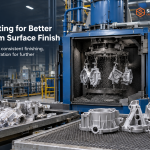
- Shot blasting
- Surface treatment
- Polishing
These processes improve corrosion resistance and extend product life.
Manufacturers such as Sheetal Metals combine die casting, machining, and finishing operations to provide complete manufacturing solutions.
Quality Control in Die Casting
Quality control is essential in every manufacturing process.
Even small variations can affect component performance.
Manufacturers perform several inspections throughout production, including:
- Dimensional checks
- Material testing
- Surface inspection
- Process monitoring
- Final verification
These inspections help ensure consistent quality and customer satisfaction.
Conclusion
Aluminium pressure die casting is one of the most effective manufacturing processes available today. It helps produce lightweight, durable, and highly accurate components for a wide range of industries.
The process offers many advantages, including high production speed, excellent accuracy, smooth surface finishes, and cost-effective manufacturing. These benefits make it a preferred choice for electric vehicles, automotive systems, electronics, lighting products, and industrial equipment.
As industries continue to demand high-performance aluminium components, manufacturers like Sheetal Metals play an important role by delivering precision-engineered solutions through advanced die casting and manufacturing capabilities.
📅 Last updated: