
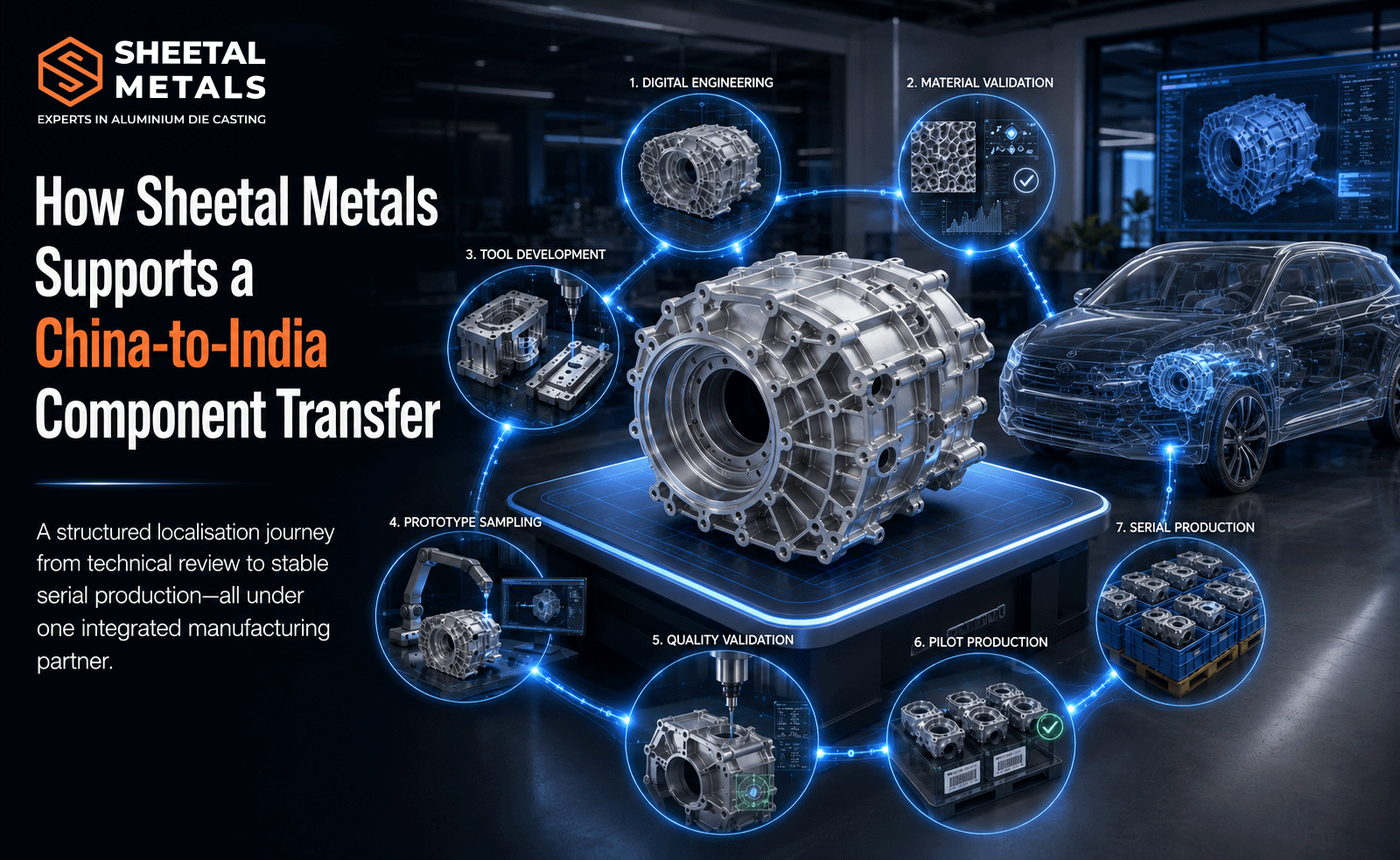
A practical localisation roadmap covering technical review, tooling, sampling, validation and production ramp-up.
Transferring an EV component from a Chinese supplier to an Indian manufacturer requires more than copying its external shape. The process must protect fit, function, quality, reliability and assembly performance. Sheetal Metals can support customers through a structured localisation programme.
1. Technical review
Review drawings, 3D data, alloy, tolerances, machined surfaces, sealing faces, coating requirements and annual demand.
2. Existing sample study
Evaluate an approved imported sample for dimensions, wall thickness, machining allowances, finish and assembly features.
3. Tooling strategy
Assess whether the project requires a new die, transfer of a customer-owned die, die modification, fixtures or checking gauges.
4. Process development
Define casting parameters, trimming, deburring, shot blasting, machining sequence, inspection points and surface treatment.
5. Trial production
Produce initial castings and machined samples for dimensional, visual, assembly and functional evaluation.
6. Corrections and validation
Implement agreed corrections, repeat trials where required and establish approved process parameters.
7. Pilot batch and ramp-up
Run a controlled pilot batch, confirm packaging and traceability, then scale to regular production and delivery.
Managing the transition without disrupting supply
A phased transfer can reduce risk. The customer may continue limited sourcing from the existing supplier while the Indian process is being developed. Once samples and pilot batches are approved, production can be divided between sources and gradually shifted based on performance, capacity and commercial goals.
- Maintain existing supply during development
- Validate the Indian die and machining process before volume transfer
- Create an agreed approval and escalation process
- Define safety stock during the transition period
- Increase domestic allocation only after stable batch performance
Quality considerations for EV housings
- Dimensional accuracy and geometric tolerances
- Bearing bores, shaft locations and sealing faces
- Thread quality and mounting-hole position
- Porosity control based on functional requirement
- Leak-path control where applicable
- Coating thickness and adhesion
- Batch identification and traceability
| A successful localisation programme should have clear technical ownership, measurable approval criteria and a planned transition from sample to stable serial production. |
What Sheetal Metals can coordinate in-house
- Aluminium High Pressure Die Casting
- CNC and VMC machining
- Trimming, deburring and shot blasting
- Primer and powder coating
- Dimensional and final inspection
- Packaging and dispatch coordination
Conclusion
The China-to-India transfer becomes easier when casting, machining, finishing and quality teams work under one coordinated system. Sheetal Metals can help customers reduce the complexity of managing multiple vendors and create a practical path toward domestic serial production.
📅 Last updated:
