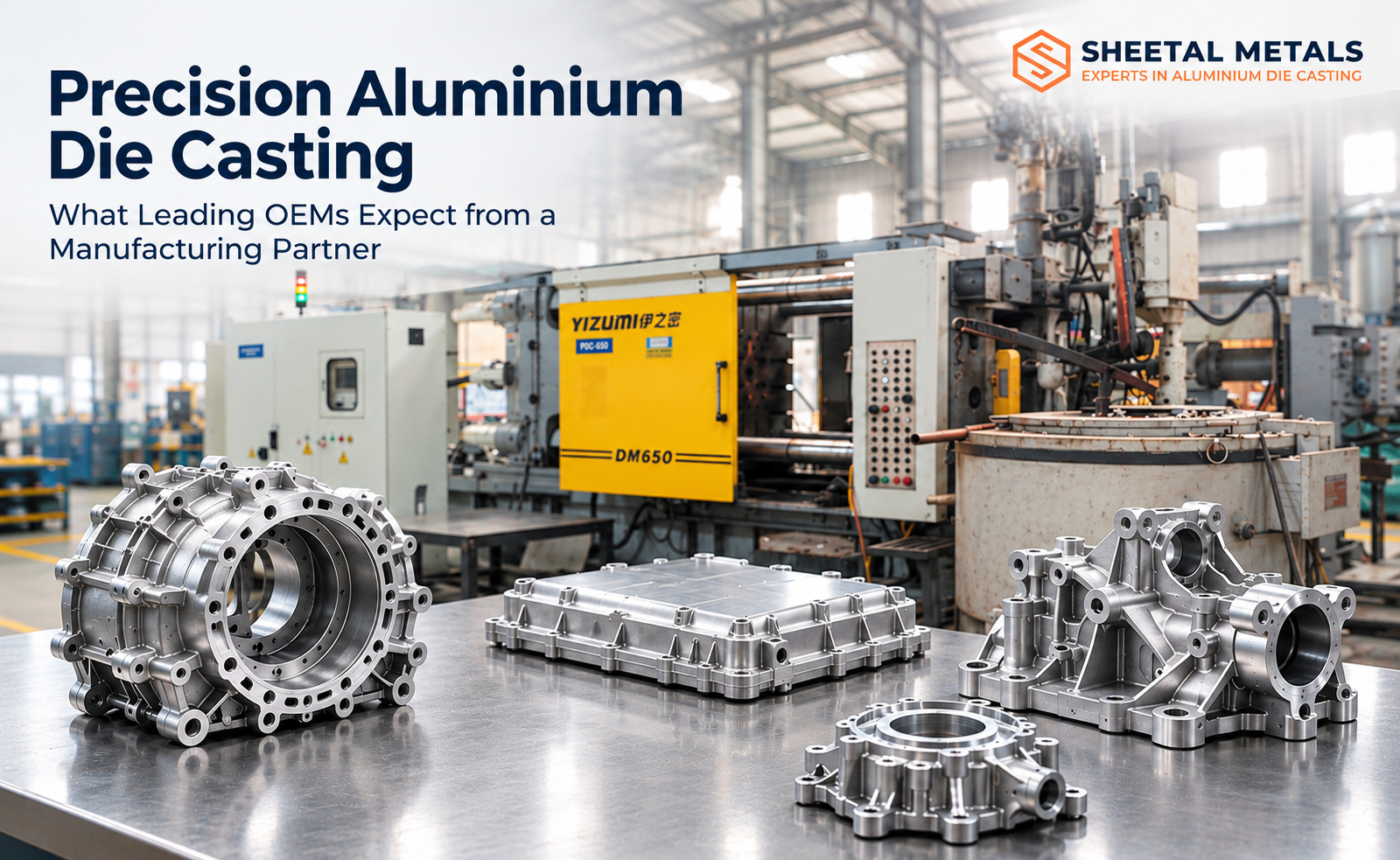
Choosing the right aluminium die casting partner is an important decision for Original Equipment Manufacturers (OEMs). The right supplier can help maintain product quality, control production costs, and meet delivery schedules. A reliable partner also supports long-term manufacturing goals.
Today, OEMs need more than a supplier that can produce metal components. They need a manufacturing partner that understands engineering requirements, maintains consistent quality, and supports scaled production.
Aluminium die casting plays an important role in automotive, electric vehicle, lighting, electronics, solar, and industrial applications. However, not every manufacturer offers the same level of technical support and production capability.
So, what should OEMs look for when selecting a precision aluminium die casting partner? Here are the key factors to consider.
1. Strong Engineering and Manufacturing Capabilities
A capable manufacturing partner should understand the component before production begins. This includes its design, dimensions, material requirements, and intended application.
Good engineering support helps identify potential manufacturing challenges at an early stage. It can also reduce unnecessary design changes during production.
OEMs should evaluate whether a supplier can support activities such as:
- Product design and simulation
- Die design and development
- Aluminium pressure die casting
- CNC and VMC machining
- Surface finishing
- Component inspection
These capabilities help create a smoother path from component design to finished production parts.
Sheetal Metals supports aluminium component manufacturing through services that include product design, die development, pressure die casting, machining, and finishing. This combination helps customers coordinate important manufacturing stages with one partner.
2. Consistent Quality Across Production Batches
Quality is one of the most important requirements for high-end OEMs. A component may meet specifications during the first production run but still create problems if later batches vary.
Consistent quality helps ensure that components fit correctly and perform as expected. It also reduces assembly issues, rejected parts, and production interruptions.
OEMs should ask potential suppliers how they maintain quality throughout production. Important areas include:
- Inspection of critical dimensions
- Monitoring of casting parameters
- Verification of machining features
- Surface finish checks
- Identification and control of defects
- Records of inspection results
A clear quality process helps manufacturers identify issues before components reach the customer.
The goal is not simply to inspect finished products. It is to build quality checks into the manufacturing process and maintain control at every important stage.
3. Precision in Casting and Machining
Many aluminium components require more than a good casting. They may also need accurate holes, flat surfaces, mounting points, threads, or other features.
These details are important in automotive assemblies, EV systems, electronic enclosures, and industrial equipment. Even a small dimensional variation can affect fit and function.
OEMs should evaluate a supplier’s ability to manage both casting accuracy and machining requirements.
CNC and VMC machining can improve the accuracy of selected features after casting. However, the process must be planned carefully. Manufacturers need to understand which dimensions can be achieved during casting and which require secondary machining.
A capable partner considers these requirements early. This helps avoid unnecessary machining, excess material removal, and avoidable production costs.
4. Reliable Production Capacity and Delivery
High-volume OEM production depends on a steady supply of components. Delayed deliveries can affect assembly schedules, inventory levels, and customer commitments.
A supplier must understand the expected order volume, production frequency, and delivery schedule before accepting a project.
OEMs should evaluate:
- Available manufacturing capacity
- Production planning methods
- Equipment availability
- Material supply planning
- Maintenance practices
- Packaging and dispatch processes
Production capacity is not only about the number of machines. It also depends on cycle times, tooling availability, inspection requirements, and process stability.
A suitable manufacturing partner should communicate realistic lead times and identify possible risks early. Clear communication helps both parties plan production more effectively.
5. Complete Manufacturing Support
Working with multiple suppliers can increase coordination work. Each supplier may follow different schedules, quality procedures, and communication methods.
A partner that supports several manufacturing stages can help simplify this process.
For example, an aluminium component may require pressure die casting, machining, shot blasting, powder coating, inspection, and packaging before delivery.
When these stages are planned together, it becomes easier to manage process handoffs and track production progress.
Sheetal Metals offers manufacturing services that include aluminium pressure die casting, CNC/VMC machining, shot blasting, and powder coating. These capabilities support customers who need multiple operations for their aluminium components.
OEMs should still verify which services are required for their specific project and how each stage will be controlled.
6. Material Knowledge and Application Understanding
The right material depends on how the finished component will be used. Factors such as strength, weight, thermal performance, corrosion exposure, and operating conditions all influence material selection.
For example, an aluminium housing for an electronic device may need good heat transfer and dimensional stability. An automotive component may have different structural and operating requirements.
A supplier should understand these functional needs before recommending a manufacturing approach.
OEMs should discuss the operating environment, performance expectations, and applicable material specifications at the start of a project.
Material selection should also consider casting performance and any machining or finishing requirements. This helps align component design with practical manufacturing needs.
7. Effective Communication and Technical Support
Strong communication is essential when manufacturing requirements are complex. Drawings may change, specifications may need clarification, and production issues may require quick decisions.
A dependable partner should provide clear updates and respond to technical questions in a timely manner.
Before selecting a supplier, OEMs should assess how the company handles:
- Technical drawing reviews
- Design changes
- Sample approval
- Quality concerns
- Production updates
- Delivery planning
Clear communication reduces misunderstandings and supports better coordination between engineering, procurement, quality, and production teams.
It also helps both parties resolve issues before they affect the wider manufacturing schedule.
8. Long-Term Reliability and Continuous Improvement
A good supplier relationship should deliver value beyond the first order. OEMs need partners who can support changing production needs and work to improve manufacturing performance over time.
Continuous improvement may involve reducing scrap, improving cycle times, refining inspection methods, or making production planning more effective.
Suppliers should also be willing to review recurring issues and work with customers to identify practical solutions.
When evaluating a potential partner, OEMs should review relevant quality certifications, documented processes, inspection capabilities, and actual performance data where available.
Certifications can provide useful evidence of a quality management system, but they should not replace a detailed assessment of manufacturing capability and project requirements.
How Sheetal Metals Supports OEM Manufacturing Requirements
Sheetal Metals provides aluminium pressure die casting and related manufacturing services for industrial applications. Its capabilities include product design and simulation, die design and development, machining, shot blasting, and powder coating.
These services are relevant to customers developing aluminium components for automotive, EV, lighting, electronics, solar, and other industrial applications.
For OEMs, selecting a manufacturing partner starts with a clear understanding of component requirements. Material specifications, production volumes, critical dimensions, finishing needs, and inspection criteria should all be discussed before production begins.
Sheetal Metals works across key stages of aluminium component manufacturing, helping customers coordinate casting and secondary operations according to project requirements.
OEMs can assess the company’s capabilities against their drawings, technical specifications, quality expectations, and production plans to determine whether it is the right fit for their projects.
Conclusion
Selecting a precision aluminium die casting partner requires more than comparing prices. OEMs should consider engineering support, consistent quality, machining accuracy, production capacity, material knowledge, and delivery reliability.
A supplier with coordinated manufacturing capabilities can simplify project management and support a more controlled production process.
The best partnership begins with clear technical requirements and honest communication. By evaluating suppliers against these factors, OEMs can make informed decisions and build stronger manufacturing relationships.
For companies seeking aluminium components for demanding industrial applications, Sheetal Metals offers a range of casting, machining, and finishing capabilities that can be evaluated against specific project needs.
📅 Last updated: