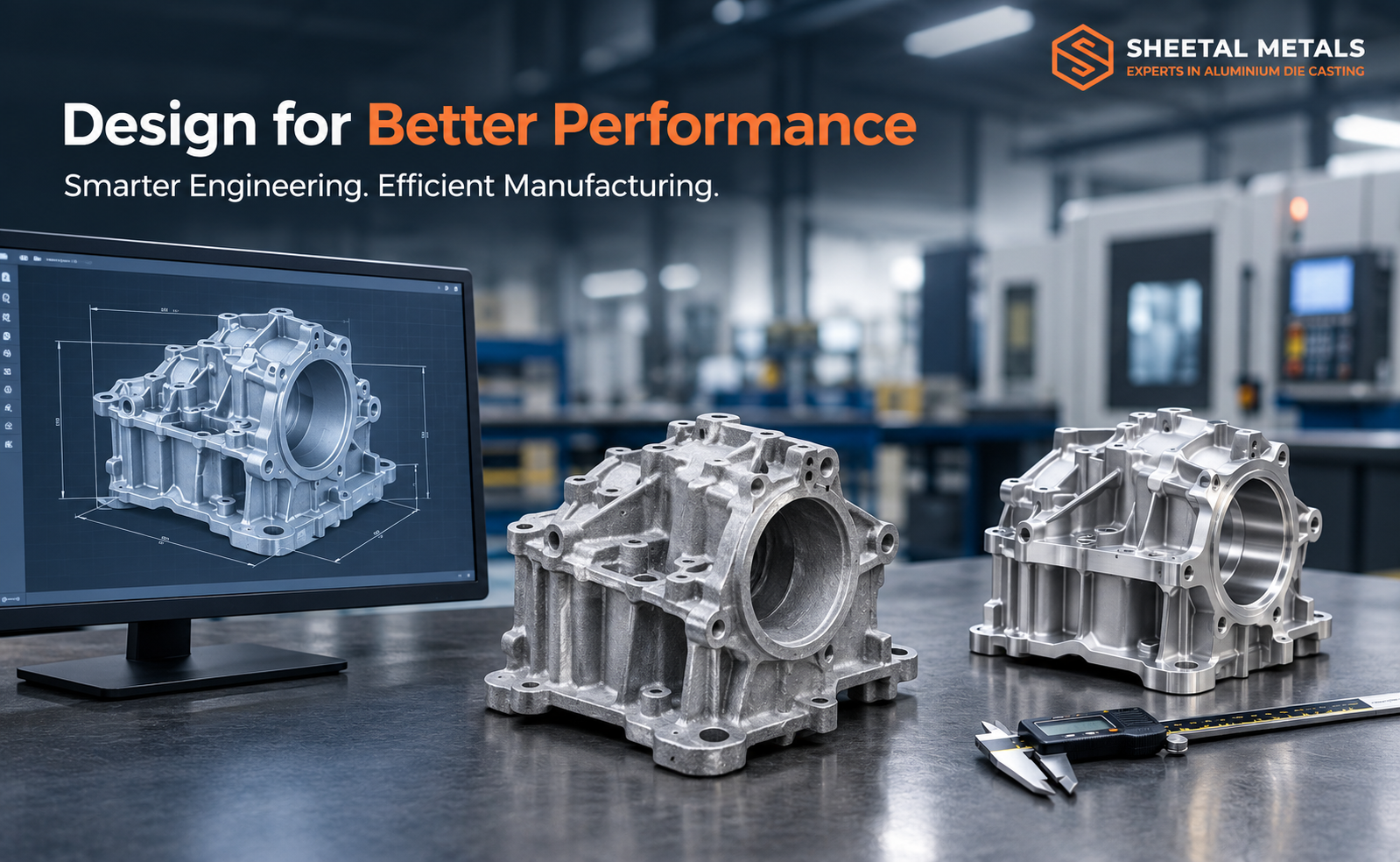
Aluminium components are widely used in automotive, electric vehicles (EVs), lighting, electronics, and industrial equipment. These parts must meet specific requirements for strength, weight, accuracy, and durability.
However, component performance depends on more than material selection. Good design also affects manufacturing cost, production time, and product quality.
A well-designed component can reduce material waste, simplify machining, and support consistent production. A poor design can increase tooling costs, create manufacturing challenges, and delay delivery.
For OEMs and product engineers, understanding these factors is essential. Let us explore how aluminium component design affects manufacturing cost and performance.
1. Why Component Design Matters
Component design defines the shape, dimensions, wall thickness, and functional features of a part. These details influence how easily it can be manufactured.
A practical design can simplify production and reduce unnecessary operations. A complex design may require special tooling, extra machining, and more inspection.
Good design helps manufacturers achieve:
- Better material utilisation
- Lower machining costs
- Consistent component dimensions
- Reliable assembly and fit
- Less production waste
Considering manufacturing needs during the design stage can prevent costly changes later.
2. Wall Thickness and Material Usage
Wall thickness affects component weight, strength, and casting quality.
Thick sections can increase material usage and weight. They may also cool unevenly and increase the risk of shrinkage defects.
Very thin walls can create different problems. They may be difficult to fill during casting and may not provide enough strength.
The right thickness depends on the component’s shape, material, and intended use. Designers should balance strength with practical manufacturing requirements.
This approach helps control material costs without compromising product performance.
3. Geometry and Structural Strength
The shape of an aluminium component affects both its strength and manufacturing complexity.
Features such as ribs, bosses, mounting points, and internal channels serve specific purposes. Ribs can improve stiffness without adding excessive material. Bosses provide locations for fasteners and mounting features.
However, these features need careful planning. Sharp corners and sudden changes in wall thickness can create stress concentrations or casting challenges.
Smooth transitions and practical feature placement can improve manufacturability.
A well-planned design helps deliver the required strength while keeping production efficient.
4. Design Complexity and Tooling Costs
Aluminium pressure die casting uses a specially designed die to produce components. Complex shapes can make the die more difficult and expensive to manufacture.
Deep recesses, undercuts, and side openings may require additional tooling mechanisms. These features can increase tooling costs and maintenance needs.
Some complex features are essential. Others may be simplified without affecting performance.
Engineers should review each feature before finalising the design. A practical design can reduce tooling complexity and support smoother production.
This is especially important for OEMs planning high-volume manufacturing.
5. Machining and Production Costs
Many aluminium components require CNC or VMC machining after casting. Machining helps achieve precise dimensions, hole positions, and surface finishes.
However, unnecessary machining increases production time and cost.
For example, machining surfaces that do not affect component function may add expense without providing real value. Poor tool access can also increase machining time.
Designers should identify critical dimensions early. Manufacturers can then focus machining on the features that need greater accuracy.
Sheetal Metals offers aluminium pressure die casting and CNC/VMC machining services for industrial components. Planning these operations together can help customers manage manufacturing requirements more efficiently.
6. Tolerances and Assembly Fit
Tolerances define the acceptable variation in a component’s dimensions. They are important when aluminium parts must fit into larger assemblies.
Incorrect dimensions can cause alignment problems, difficult assembly, or poor product performance.
However, very tight tolerances on every feature can increase machining and inspection costs.
Designers should identify which dimensions are critical to function. Mounting holes may need tighter control than non-functional outer surfaces.
Setting realistic tolerances helps balance accuracy, product performance, and manufacturing cost.
7. Surface Finish and Coating
Surface finish affects a component’s appearance, protection, and suitability for its application.
Some parts need a functional finish. Others require additional treatment, such as shot blasting or powder coating.
These requirements should be included in the design and production plan.
For example, coating requirements may affect surface preparation and the handling of finished parts. Clear specifications help prevent rework and improve consistency.
Sheetal Metals provides shot blasting and powder coating services alongside its aluminium manufacturing capabilities. This can help customers coordinate casting and finishing requirements.
8. Designing for High-Volume Production
A component that works in a prototype may still present challenges during large-scale production.
High-volume manufacturing requires consistent quality, repeatable processes, and practical inspection methods.
Before production begins, engineers should consider:
- Can the component be cast consistently?
- Are critical features easy to inspect?
- Can machining be completed efficiently?
- Is the design suitable for the required production volume?
- Can the required finish be maintained across batches?
Reviewing these questions early helps reduce manufacturing risks and supports reliable production planning.
How Sheetal Metals Can Support Your Aluminium Component Requirements
Choosing the right manufacturing partner is an important part of successful component development. OEMs need a supplier that understands technical specifications and can support the manufacturing processes their projects require.
Sheetal Metals provides product design and simulation, die design and development, aluminium pressure die casting, and CNC/VMC machining, shot blasting, and powder coating services. These capabilities support aluminium component requirements across automotive, EV, lighting, electronics, solar, and other industrial sectors.
If you are developing a new aluminium component or improving an existing design, involve your manufacturing partner early. Share your component drawings, material specifications, critical dimensions, finishing requirements, and expected production volumes.
This allows the manufacturing team to review your requirements and assess suitable production processes.
Planning a new aluminium component or looking for a manufacturing partner for your next OEM project? Contact Sheetal Metals to discuss your component requirements, review our manufacturing capabilities, and explore a suitable production approach for your application.
Conclusion
Aluminium component design affects manufacturing cost, production efficiency, and final product performance. Wall thickness, geometry, tooling complexity, machining, tolerances, and surface finish all influence the result.
A practical design can reduce unnecessary costs and support consistent quality. It can also help OEMs avoid costly production changes.
The key is to balance engineering requirements with manufacturing practicality from the beginning. With clear specifications and the right manufacturing partner, businesses can develop reliable aluminium components and build a stronger foundation for long-term production.
📅 Last updated: