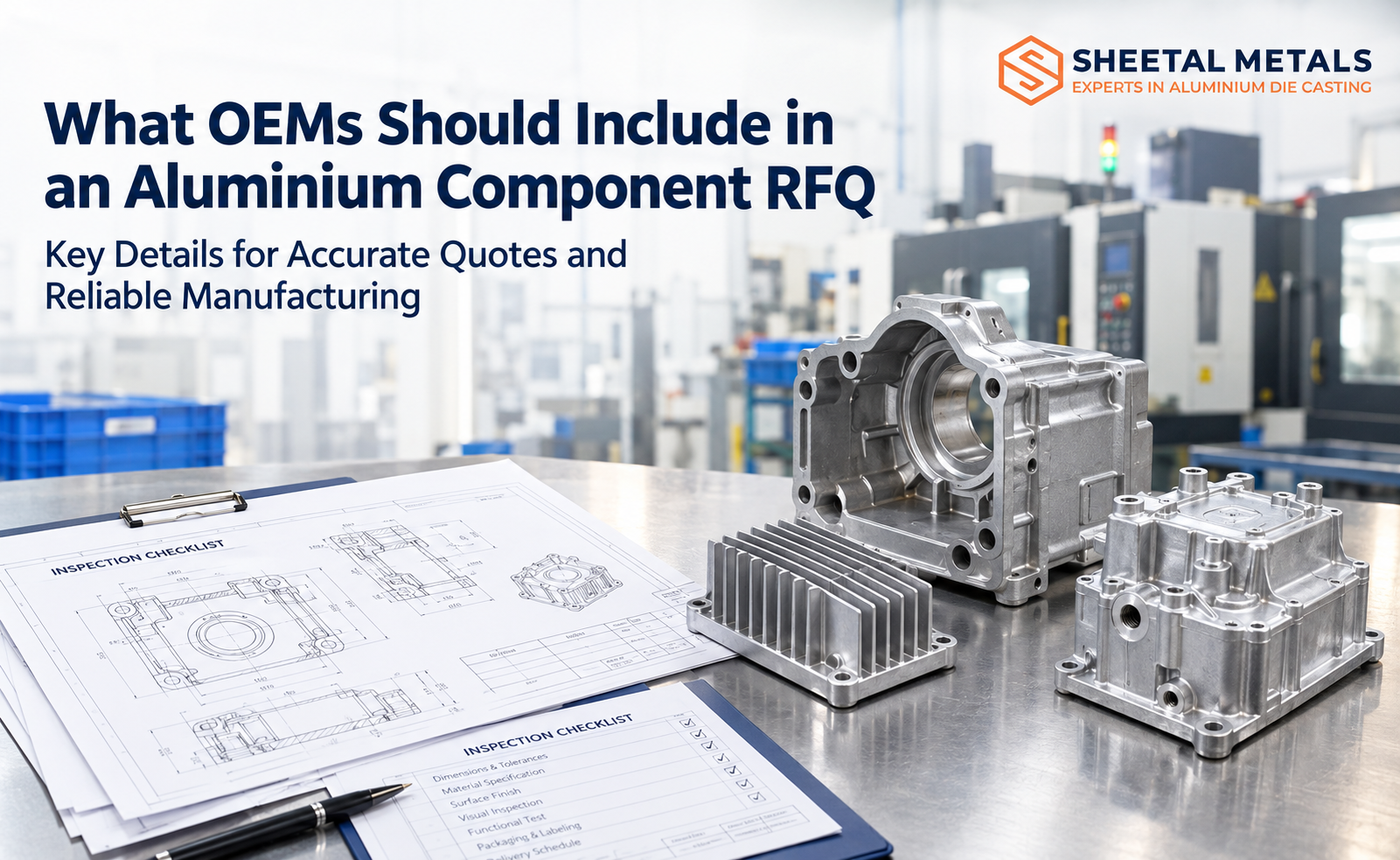
Choosing an aluminium component supplier starts with a clear Request for Quotation (RFQ). It helps manufacturers review the project, estimate costs, and plan production. Missing details make quotes harder to compare.
For OEMs, a well-prepared RFQ saves time and reduces misunderstandings. It explains the component’s purpose, production needs, and finished-part requirements.
Here are the key details to include when requesting a quotation.
1. Provide Current Technical Drawings
Share an approved component drawing with dimensions, tolerances, views, and notes. If available, include a matching three-dimensional CAD model.
Ensure both files show the same design revision. Outdated drawings can cause incorrect quotes, tooling changes, and delays.
Mark critical dimensions that affect fit, function, safety, or assembly. Identify measurement datums where needed. Clear drawings help suppliers understand the part.
2. Specify the Aluminium Alloy
Avoid describing the material only as “aluminium.” State the required alloy or provide an approved material specification. Alloys can differ in casting behaviour, strength, corrosion resistance, and machinability.
If alternatives are acceptable, say so. The supplier can suggest options for technical review, but any change should be approved before production.
Mention whether material certificates or test reports are required. This allows the supplier to plan documentation and verification.
3. Explain the Application
Describe where and how the component will be used. An electronics housing may need connector space and protection from its operating environment. An automotive part may face load, vibration, or specific assembly needs.
Include relevant conditions, such as temperature, moisture, chemical exposure, or mechanical loads. Explain functional requirements that affect design, material, or inspection.
This context helps manufacturers identify requirements that drawings may not show.
4. State Expected Order Volumes
Include the sample quantity, first production order, and estimated annual demand. Explain whether orders will arrive in regular batches or vary throughout the year.
These details help suppliers assess tooling, machine capacity, production planning, and unit pricing. If demand may grow, provide a realistic forecast.
Avoid overstating volumes just to seek a lower price. Accurate forecasts support practical planning.
5. Define Quality and Inspection Requirements
Describe the checks needed for approval and ongoing production. These may include dimensional inspection, visual checks, material verification, or tests linked to the component’s function.
Identify critical-to-quality features and state acceptance criteria. If you require a first article inspection report, measurement report, or other document, list it in the RFQ.
Include applicable customer standards or quality-system requirements. Clear expectations prevent disputes over acceptance.
For complex projects, agree on the inspection method and reporting format before samples are produced. This prevents late changes and gives both teams a shared basis for approval.
6. List Machining and Finishing Needs
Die-cast components may need CNC or VMC machining, drilling, tapping, deburring, shot blasting, or powder coating after casting.
List required operations and identify surfaces needing special attention. For coated parts, specify the colour, finish, and relevant performance requirements. State whether any areas must remain uncoated.
Make clear whether the supplier must deliver a fully finished component. If another vendor will perform certain operations, define responsibility for each stage. This helps suppliers quote the correct scope.
7. Explain Packaging and Delivery
Packaging should protect parts during storage and transport. Specify requirements for separators, protective wrapping, returnable containers, labels, and batch identification.
Provide the delivery location, target schedule, and preferred shipment quantities. State whether deliveries follow a fixed schedule or require flexible releases.
If parts are vulnerable to scratches, contamination, or coating damage, include handling instructions. These details help estimate costs and reduce transit damage.
8. Clarify Tooling and Commercial Terms
For a new die-cast part, state whether the quote should include die design, tooling manufacture, samples, validation, and production. Ask suppliers to separate one-time tooling costs from recurring part prices where practical.
Clarify tooling ownership, storage, maintenance, expected tool life, and charges for design changes.
Request lead times, payment terms, quote validity, and minimum order quantities. Comparing the same scope makes quotations more useful than comparing unit prices alone.
9. Set Dates and Approval Steps
Include target dates for samples, approval, and production start. Explain who will review drawings, samples, and inspection reports.
List formal approval stages in order, such as drawing review, tooling approval, sample inspection, and written production release.
A realistic timeline helps both teams address schedule risks early.
How Sheetal Metals Can Support Your RFQ
Sheetal Metals offers aluminium pressure die casting and related services, including product design and simulation, die design and development, CNC/VMC machining, shot blasting, and powder coating. These capabilities serve projects in automotive, EV, lighting, electronics, solar, and other industrial sectors.
When contacting Sheetal Metals, share current drawings, material specifications, estimated volumes, critical dimensions, finishing needs, inspection requirements, and target dates. Include any customer standards that apply.
Planning a new aluminium component or evaluating suppliers for an OEM programme? Contact Sheetal Metals to discuss your requirements and request a quotation based on your component specifications. Complete information helps the team review the project.
Conclusion
A strong RFQ does more than request a price. It explains the component’s purpose, required quality, production volume, finishing, and delivery expectations.
Accurate drawings, clear specifications, and realistic forecasts help suppliers prepare useful quotations. A clear scope makes proposals easier to compare.
Before sending an RFQ, check that technical, quality, commercial, and delivery details are complete. A well-prepared request creates a stronger basis for supplier evaluation and a more controlled path to aluminium component production.
📅 Last updated: