
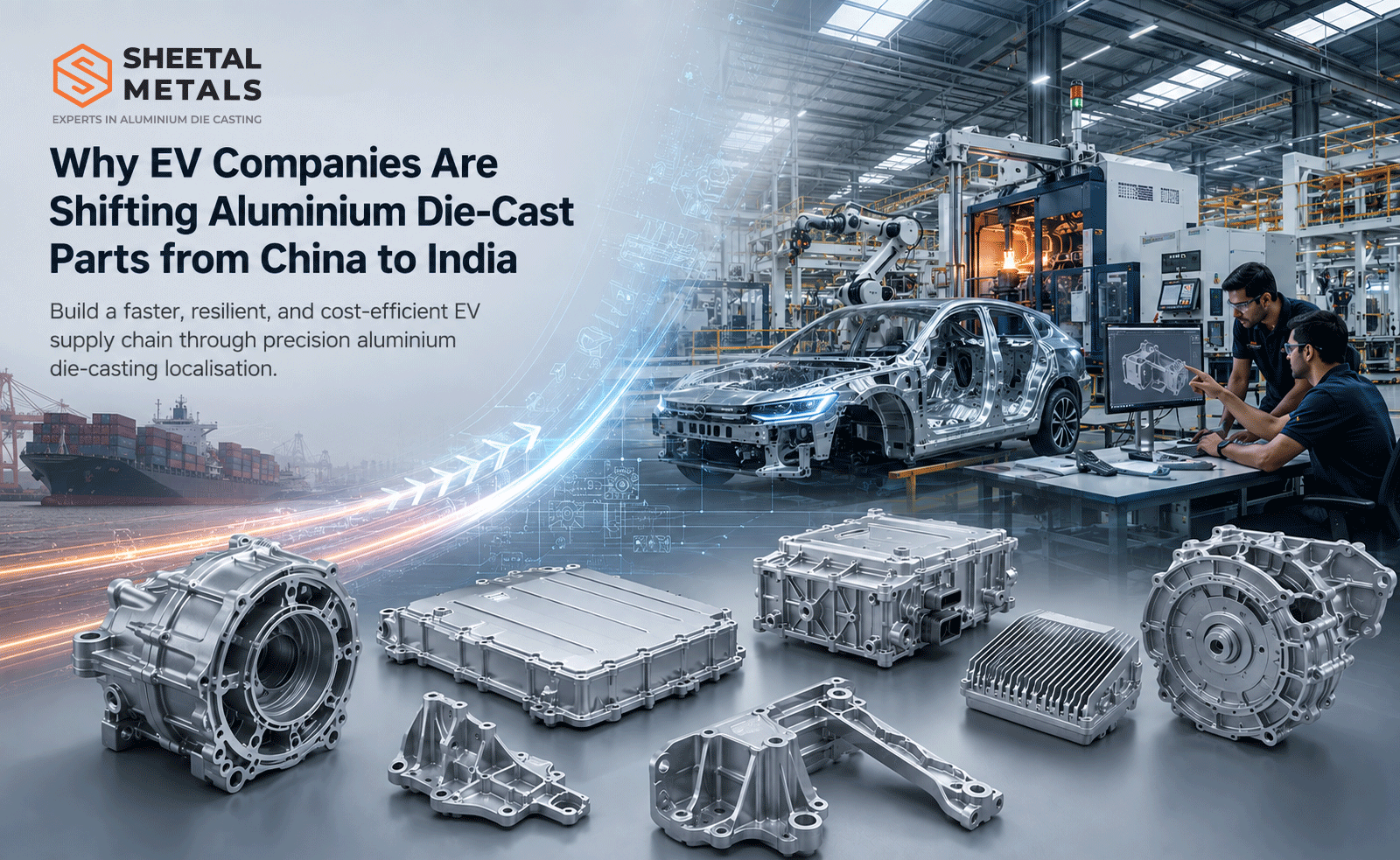
A strategic shift from import dependence to a more responsive, resilient and controllable domestic supply chain.
The electric vehicle industry is moving quickly. Product designs are changing, production volumes are scaling, and manufacturers are under continuous pressure to reduce cost while improving quality and delivery reliability. In this environment, depending heavily on imported aluminium die-cast components can become a serious operational risk.
China has played an important role in the global EV supply chain. However, many EV manufacturers are now creating a China-plus-one strategy or actively localising components in India. The objective is not merely to change the country of origin; it is to improve control over engineering, inventory, quality, lead time and long-term supply security.
The hidden cost of imported EV components
The quoted purchase price of a component does not represent its complete cost. Imported parts also carry indirect costs and risks that become significant when production volumes increase.
- International freight, insurance, port and customs expenses
- Currency fluctuations and changing landed cost
- Long replenishment cycles and larger safety-stock requirements
- Working capital blocked in goods in transit and warehouse inventory
- Slow replacement of rejected or damaged components
- Emergency air-freight expenses when production is at risk
- Limited visibility into tooling, casting and machining processes
Why localisation matters more in the EV industry
EV products evolve faster than many conventional vehicle platforms. Motor ratings, battery configurations, connectors, thermal-management features and mounting arrangements may change during development or even after market launch. A distant overseas supply base can make these changes slower and more expensive.
- Faster design and engineering changes
- Shorter sample-development cycles
- Easier plant visits and supplier audits
- Smaller and more frequent delivery schedules
- Reduced risk of line stoppage
- Improved protection of product designs and process knowledge
- Better coordination between the customer’s engineering, quality and sourcing teams
| Localisation is not simply a price comparison between China and India. It should be evaluated on total landed cost, inventory, responsiveness, quality control and supply continuity. |
A practical China-plus-one approach
Companies do not need to stop overseas sourcing immediately. A practical approach is to develop and approve a capable Indian supplier as an alternate source. After tooling, samples and processes are validated, the domestic share can be increased gradually. This creates supply-chain redundancy without disrupting existing production.
Why India is well positioned
India offers a growing automotive and EV ecosystem, skilled engineering manpower, strong machining capability and improving logistics infrastructure. Domestic sourcing also allows closer collaboration and supports the development of a stable supplier network for future product platforms.
Conclusion
For EV companies, shifting selected aluminium die-cast components from China to India can reduce risk, improve agility and strengthen long-term competitiveness. The success of this transition depends on choosing a manufacturing partner that can manage casting, machining, finishing, validation and delivery as one coordinated process.
📅 Last updated:
