Manufacturing is changing.
Today, companies must deliver quality products. They must also reduce waste and use resources wisely.
This is why sustainable manufacturing matters.
Sustainable manufacturing means making products with less environmental impact. It focuses on efficient material use, lower waste, better process control, and long product life.
Aluminium die casting supports these goals.
It helps manufacturers produce lightweight, durable, and recyclable components. It also supports fast production and consistent quality.
This matters for electric vehicles, automotive products, electronics, LED lighting, and industrial equipment.
Sheetal Metals makes aluminium parts for EVs, electronics, lighting, and industrial equipment.
What Is Sustainable Manufacturing?
Sustainable manufacturing means producing goods responsibly.
It considers product quality, material use, energy use, and waste.
The goal is simple.
Make reliable products while using fewer resources.
A sustainable manufacturing process may include:
- Using recyclable materials
- Reducing scrap
- Improving product accuracy
- Reducing rejected parts
- Using efficient machines
- Reducing extra packaging
- Supporting longer product life
These practices help the environment.
They can also reduce operating costs.
Therefore, sustainability supports both business growth and responsible production.
Why Aluminium Is a Sustainable Material
Aluminium is widely used in modern manufacturing.
It is strong, lightweight, and durable.
It also resists corrosion.
Most importantly, aluminium is highly recyclable.
Aluminium can be recycled many times.
It can keep its key properties after recycling.
This makes it useful for a circular economy.
A circular economy keeps materials in use for longer.
It reduces waste.
It also reduces the need for new raw materials.
As a result, aluminium supports better resource use.
It is used in EVs, cars, electronics, lighting systems, and industrial machines.
How Aluminium Die Casting Reduces Waste
Aluminium die casting is an efficient process.
First, aluminium is melted.
Then, the molten metal is injected into a steel die under high pressure.
The die forms the required component shape.
This process creates near-net-shape parts.
A near-net-shape part is close to its final design.
Therefore, it needs less cutting after casting.
Less cutting creates less scrap.
This helps manufacturers use aluminium more efficiently.
Die casting also supports repeatable production.
The same die can produce many similar parts.
As a result, manufacturers can maintain better consistency.
Better consistency can reduce material loss.
Precision Reduces Rework
Rework creates waste.
It also increases production time.
When a part does not meet the required size, it may need extra work.
Sometimes, the part must be rejected.
This wastes material, labour, and energy.
Precision manufacturing helps prevent this issue.
Accurate dies produce consistent shapes.
CNC machining improves important dimensions.
It can create accurate holes, threads, flat surfaces, and mounting areas.
This improves part fit during assembly.
It also reduces the need for correction.
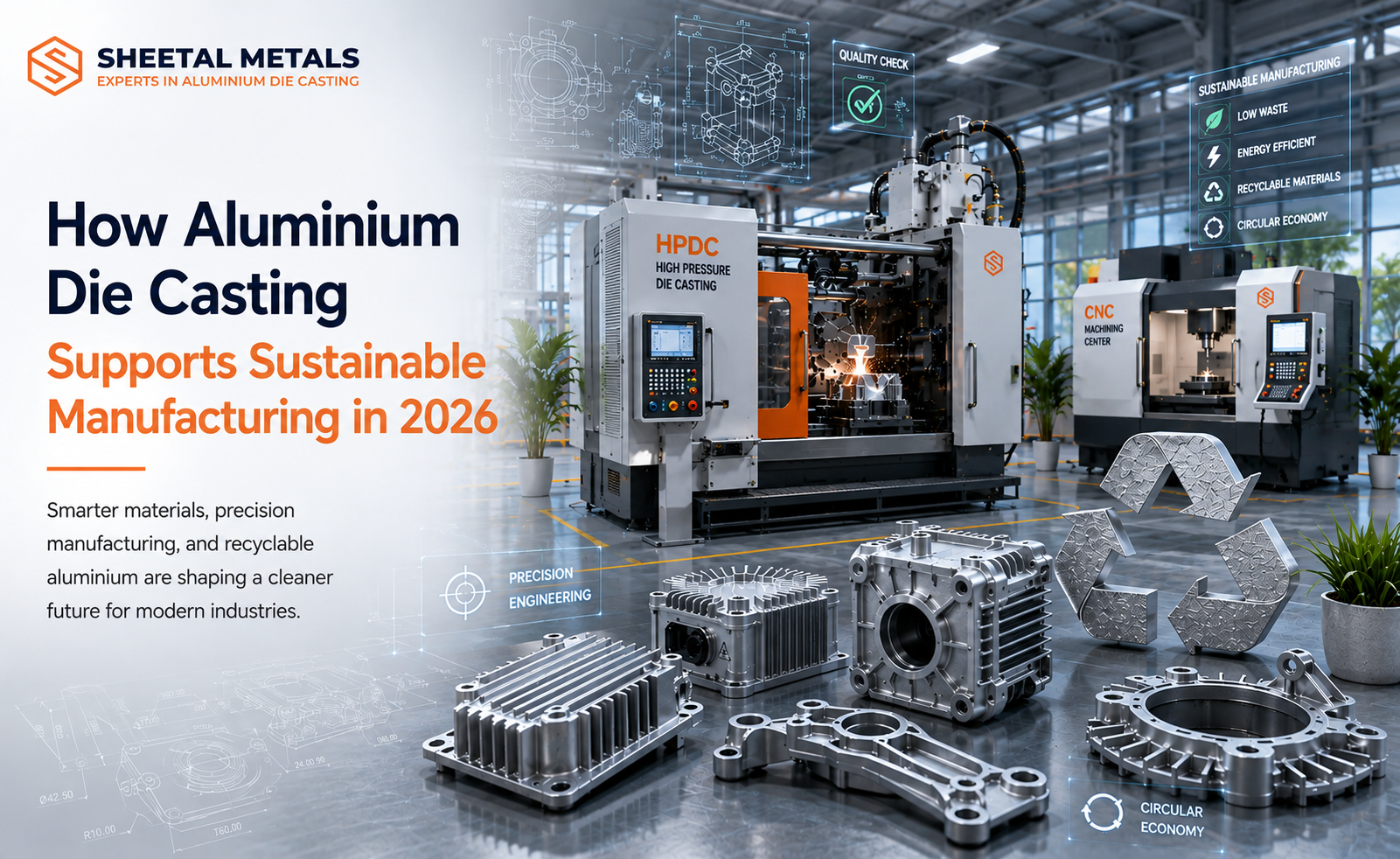
Sheetal Metals uses die casting and CNC machining to make accurate aluminium parts.
Better accuracy helps reduce rework.
It also supports efficient material use.
Lightweight Components Improve Energy Efficiency
Weight affects product performance.
Lighter products often need less energy to move.
This is especially important for electric vehicles.
EV makers use aluminium components to reduce vehicle weight.
A lighter EV can use energy more efficiently.
It may also support better driving range.
Aluminium is used in many EV parts.
These include:
- Battery housings
- Motor housings
- Inverter covers
- Heat sinks
- Charger covers
- Structural brackets
Aluminium also supports lightweight design in cars, lighting products, and industrial equipment.
Therefore, it helps manufacturers create energy-efficient products.
Aluminium Components Last Longer
Long product life supports sustainability.
A durable component does not need frequent replacement.
This can reduce waste over time.
Aluminium offers good corrosion resistance.
It performs well in many operating conditions.
It also handles heat effectively.
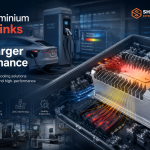
This makes it useful for heat sinks and electronic housings.
Heat sinks remove heat from electronic systems.
They help protect sensitive parts.
They also support stable performance.
Aluminium heat sinks are used in EVs, LED lights, power supplies, and industrial electronics.
Better heat control can improve product life.
As a result, fewer components may need replacement.
Recycling Supports a Circular Economy
Recycling is one of aluminium’s strongest benefits.
Aluminium scrap can be collected and processed.
Then, it can be reused in future production.
This reduces waste.
It also reduces the need for fresh raw material.
Recycling supports a circular manufacturing system.
In this system, materials do not become waste quickly.
Instead, they return to the production cycle.
Manufacturers can also monitor scrap levels.
They can separate useful scrap from other waste.
They can improve material recovery.
These steps support better resource management.
High-Volume Production With Consistent Quality
Many industries need large quantities of similar components.
EV brands need battery covers and motor housings.
Lighting companies need durable housings.
Electronics brands need heat sinks and enclosures.
Aluminium pressure die casting supports high-volume production.
Once the die is ready, it can produce many parts.
The parts can maintain a consistent shape.
This helps reduce variation.
It also supports faster production.
Faster production can improve efficiency.
It can also reduce unnecessary resource use per component.
Common die-cast products include:
- EV charger covers
- Motor housings
- Heat sinks
- LED lighting housings
- Automotive brackets
- Industrial enclosures
- Electrical covers
- Machinery parts
Quality Control Supports Sustainability
Quality control is important for sustainable manufacturing.
Poor-quality parts create waste.
They may fail early.
They may need replacement.
They may also affect the larger product.
Quality checks help reduce these risks.
Manufacturers can inspect dimensions, surface finish, and part function.
They can also check casting quality.
They can inspect machining accuracy.
These checks help identify issues early.
Early checks can reduce large-scale rejection.
They also support reliable product performance.
Sheetal Metals focuses on quality and precision during aluminium component production.
This supports durable products and better material use.
How Sheetal Metals Supports Responsible Manufacturing
Sheetal Metals produces aluminium die-cast components for modern industries.
Its work supports automotive, EV, electronics, lighting, and industrial applications.
The company uses aluminium pressure die casting and CNC machining.
These processes help produce accurate components.
Aluminium supports responsible manufacturing because it is lightweight and recyclable.
It also supports long product life.
Sheetal Metals focuses on consistent production and precise component quality.
This helps customers source reliable aluminium parts for demanding applications.
Conclusion
Sustainable manufacturing is important in 2026.
Companies need materials that support quality, efficiency, and better resource use.
Aluminium offers these benefits.
It is lightweight, durable, corrosion-resistant, and recyclable.
Aluminium die casting also supports efficient production.
It creates near-net-shape parts.
It reduces material waste.
It supports high-volume production.
CNC machining adds more accuracy.
Quality control improves reliability.
Together, these processes help manufacturers reduce waste and produce long-lasting components.
From EV housings to heat sinks, aluminium components support a cleaner manufacturing future.
Sheetal Metals supports this future through aluminium pressure die casting and precision machining.
Sustainability begins with better material choices.
It also grows through better manufacturing processes.
📅 Last updated: