
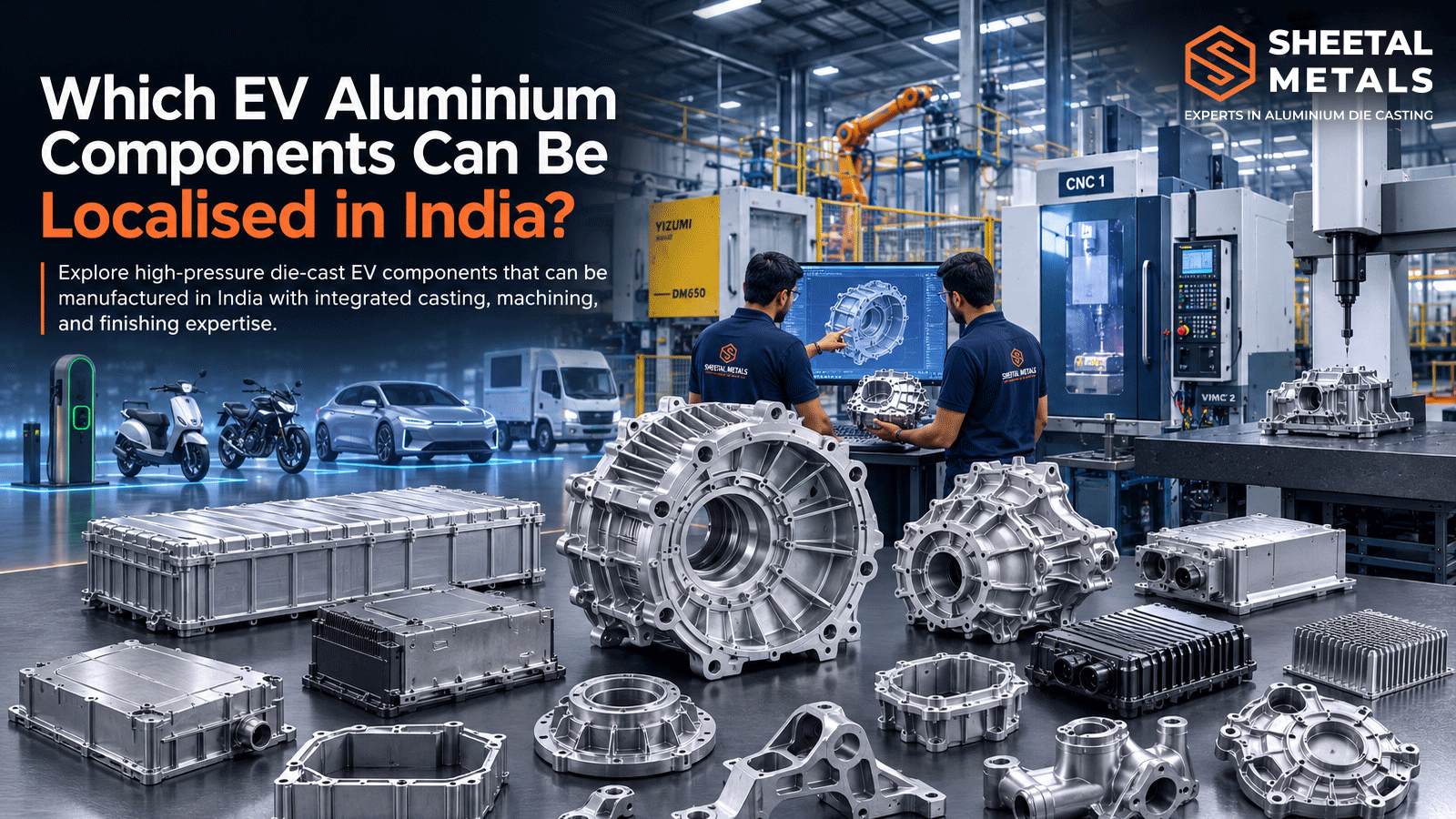
A component-wise guide for electric two-wheelers, three-wheelers, passenger vehicles, commercial vehicles and EV charging systems.
Aluminium is widely used in electric vehicles because it combines low weight, corrosion resistance, mechanical strength, thermal conductivity and suitability for complex high-volume production. High Pressure Die Casting can create thin walls, ribs, cooling fins, mounting bosses and integrated features in a single component.
Motor and drive-system components
- Electric motor housings
- Hub-motor housings and side covers
- Stator housings and motor end covers
- Gearbox and reduction gear housings
- Differential and drive-unit housings
- Motor mounting brackets
Battery-system components
- Battery-module housings and covers
- Battery end plates and structural supports
- Battery-management-system enclosures
- High-voltage junction-box housings
- Battery mounting brackets
- Cooling plates and thermal-management parts
Power-electronics components
- Motor-controller housings
- Inverter housings
- DC-DC converter housings
- On-board charger housings
- Power-distribution-unit enclosures
- Vehicle-control-unit and ECU housings
EV charging components
- Wall-box charger housings
- Portable charger enclosures
- Charging-controller bodies
- Power-module housings
- Heat-sink components
- Outdoor charging-equipment enclosures
Structural and chassis-related components
- Footrest and side-stand brackets
- Suspension and steering mounts
- Swing-arm related components
- Chassis and battery mounting brackets
- Grab-handle supports
- Pump, compressor and cooling-system housings
Applications across EV categories
| EV Category | Typical Components | Key Localisation Benefit | |
| Two-wheelers | Hub motor, controller, charger and battery housings | Faster design changes and volume scalability | |
| Three-wheelers | Motor, gearbox, differential and structural parts | Improved spare availability and lower import dependency | |
| Passenger EVs | Drive-unit, inverter, battery and cooling components | Better process control and supply-chain visibility | |
| Commercial EVs | Large housings, brackets, pumps and thermal parts | Reliable supply for demanding operating conditions | |
| Charging systems | Outdoor enclosures, heat sinks and power housings | Integrated finishing and corrosion protection | |
| The best localisation candidates are components with recurring demand, high freight or inventory impact, frequent engineering changes, and a strong need for casting-plus-machining control. | |||
What customers should share for feasibility
- 2D drawings and 3D models
- Material and alloy specifications
- Existing Chinese samples, where available
- Machining drawings and critical dimensions
- Surface-finish and coating requirements
- Expected annual volume and batch size
- Inspection standards and validation requirements
Conclusion
A wide range of EV aluminium components can be localised successfully in India. The right starting point is a structured feasibility review that considers part geometry, tooling, alloy, machining, thermal requirements, surface finishing and production volume.
📅 Last updated:
