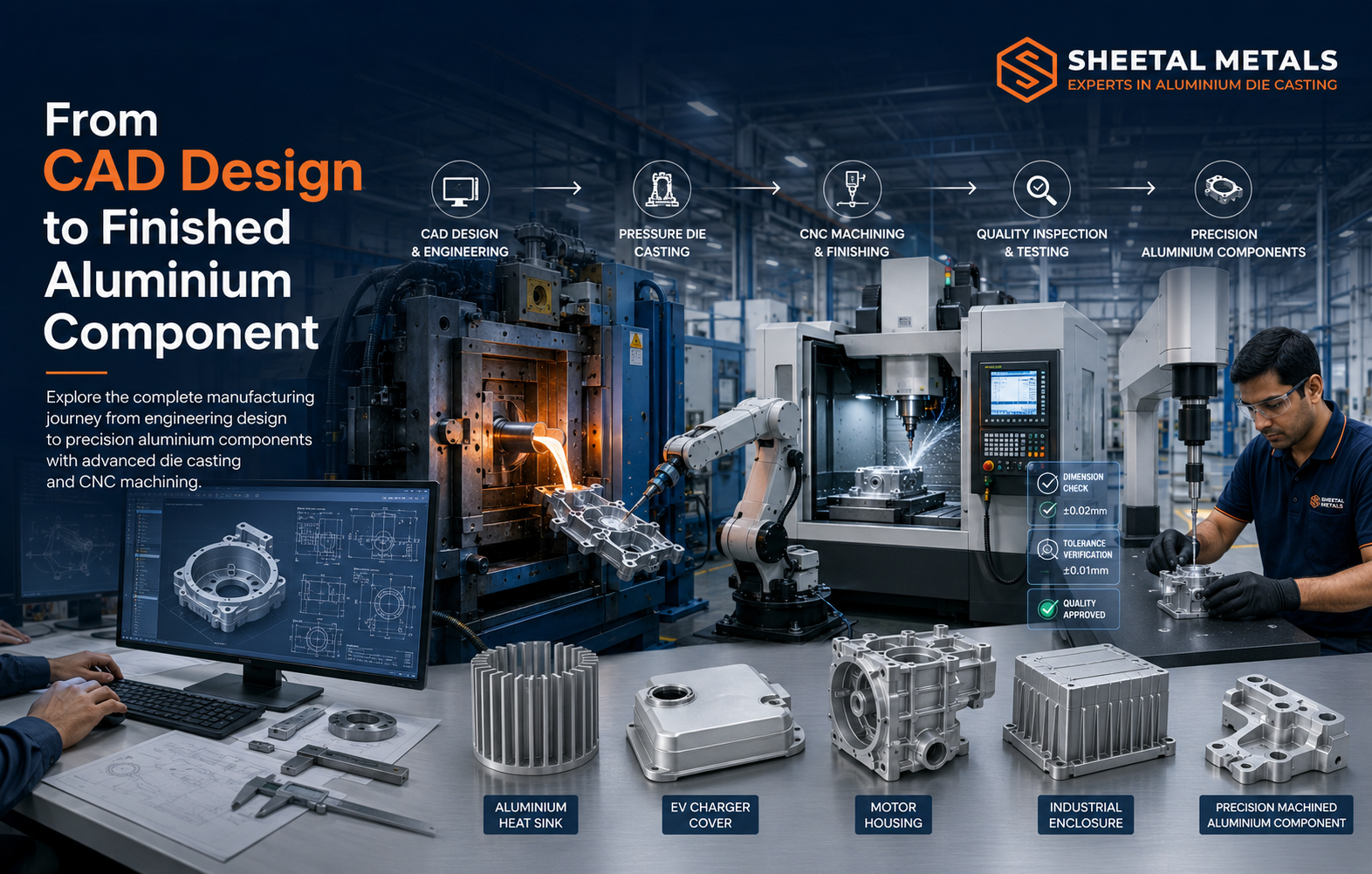
Every high-quality aluminium component begins long before metal enters a die casting machine.
It starts with an idea.
That idea is transformed into a detailed engineering design. Then, it moves through several manufacturing stages before becoming a finished product.
Each stage has a clear purpose.
A small mistake during design can create production problems later. Likewise, poor machining or inspection can affect the final quality.
For this reason, successful manufacturers follow a well-planned process from the beginning.
The journey combines engineering expertise, advanced machinery, and strict quality control. Together, these steps ensure that every component meets customer expectations.
At Sheetal Metals, precision aluminium components are produced through aluminium pressure die casting and CNC machining. Every stage focuses on consistency, accuracy, and dependable quality.
Let’s explore how an aluminium component moves from a digital design to a finished industrial product.
Understanding the Product Requirement
Every project begins with a discussion.
The customer shares the product requirement with the engineering team.
This information may include:
- A 2D engineering drawing
- A 3D CAD model
- Product dimensions
- Performance requirements
- Assembly details
- Production quantity
Engineers carefully study every detail before manufacturing begins.
This stage helps everyone understand the product’s purpose.
It also reduces the chances of costly changes later.
Good planning always saves both time and resources.
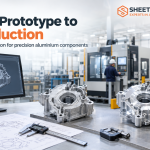
Creating the CAD Model
After gathering all the information, engineers prepare a detailed CAD model.
CAD stands for Computer-Aided Design.
This digital model becomes the foundation of the entire manufacturing process.
The design includes every important feature, such as:
- Wall thickness
- Mounting holes
- Internal ribs
- Bosses
- Threads
- Cooling features
- External dimensions
Modern CAD software allows engineers to inspect the component from every angle before production starts.
This reduces design errors and improves manufacturing efficiency.
Reviewing the Design for Manufacturing
A good design should also be easy to manufacture.
That is why engineers perform a Design for Manufacturability (DFM) review.
During this stage, they check whether the design supports efficient aluminium pressure die casting.
Several areas receive close attention.
These include:
- Uniform wall thickness
- Proper draft angles
- Smooth material flow
- Rounded corners
- Machining allowance
- Ejection feasibility
Small improvements at this stage make a big difference later.
Better designs reduce defects.
They also improve production speed and product quality.
Designing and Manufacturing the Die
Once the design is approved, the tooling process begins.
The die is a precision steel mould used to produce aluminium components.
It must withstand high temperatures and repeated production cycles.
Tool engineers manufacture the die with extreme accuracy.
Every cavity, runner, gate, and cooling channel is carefully planned.
A well-designed die ensures the following:
- Better dimensional accuracy
- Faster production
- Longer tool life
- Consistent component quality
Since the die controls the shape of every casting, its quality directly affects the final product.
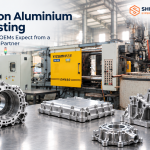
Aluminium Pressure Die Casting Begins
Now the manufacturing process becomes visible.
Aluminium is heated until it reaches the required molten temperature.
The molten metal is then injected into the steel die under high pressure.
Within seconds, the metal fills every cavity.
It cools quickly inside the die.
The die opens.
The newly formed aluminium component is removed.
This process produces accurate parts with excellent repeatability.
It is ideal for large production volumes because every cycle delivers consistent results.
At Sheetal Metals, aluminium pressure die casting supports the production of precision components for automotive, electronics, EVs, lighting, and industrial applications.
Trimming and Deburring
After die casting, the aluminium component is close to its final shape.
However, the manufacturing process is not complete.
Small amounts of extra material remain around the edges.
This excess material is called flash.
It must be removed carefully.
The component first goes through trimming.
Next, technicians remove sharp edges and burrs.
This process is called deburring.
These steps improve both safety and appearance.
They also prepare the component for precision machining.
A clean component is easier to inspect and machine accurately.
CNC Machining for Critical Features
Some dimensions require greater accuracy than die casting alone can provide.
This is where CNC machining becomes essential.
Computer Numerical Control (CNC) machines remove small amounts of material with high precision.
The machining process may include:
- Drilling
- Tapping
- Milling
- Thread cutting
- Surface facing
- Precision boring
Each operation improves dimensional accuracy.
It also creates smooth mounting surfaces and precise holes.
These features help the component fit perfectly during final assembly.
At Sheetal Metals, CNC machining complements aluminium pressure die casting to manufacture precision components that meet demanding engineering requirements.
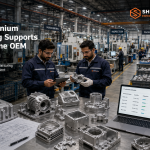
Quality Inspection
Quality is checked throughout the manufacturing process.
Inspection does not happen only at the end.
Instead, it takes place at different production stages.
Engineers inspect every important feature.
Typical inspections include:
- Dimensional measurement
- Surface finish inspection
- Visual inspection
- Hole position verification
- Thread inspection
- Overall component accuracy
Precision measuring instruments help verify every specification.
This process helps identify issues before components move to the next stage.
As a result, manufacturers can reduce defects and improve consistency.
Reliable inspection also builds customer confidence.
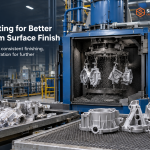
Surface Finishing
Many aluminium components require an additional finishing process.
Surface finishing improves both appearance and functionality.
The selected finish depends on the product application.
Common finishing processes include:
- Shot blasting
- Polishing
- Powder coating
- Painting
- Anodizing
These treatments improve corrosion resistance.
They also enhance durability and create a clean, professional appearance.
For many industrial products, surface finishing is the final touch before delivery.
Final Inspection, Packaging, and Delivery
Before shipment, every finished component undergoes one final inspection.
Engineers verify that the product matches the approved drawing.
They also confirm that machining, dimensions, and surface quality meet customer requirements.
After approval, components are cleaned and packed carefully.
Proper packaging protects the parts during transportation.
It also reduces the risk of scratches, dents, or contamination.
The finished aluminium components are then shipped to the customer for assembly or production use.
Why Every Manufacturing Stage Matters
Manufacturing is a connected process.
Each stage depends on the previous one.
A strong CAD design supports better tooling.
A high-quality die produces consistent castings.
Accurate machining improves assembly.
Careful inspection ensures reliable quality.
Skipping any of these steps can create problems later.
A structured manufacturing process helps reduce waste, improve efficiency, and maintain product consistency.
That is why successful manufacturers pay attention to every stage of production.
How Sheetal Metals Supports Precision Manufacturing
Sheetal Metals manufactures precision aluminium die-cast components for industries such as automotive, electric vehicles, electronics, lighting, and industrial equipment.
The company combines aluminium pressure die casting with CNC machining to produce reliable and accurate components.
By focusing on engineering precision, consistent production, and quality inspection, Sheetal Metals supports customers who require dependable aluminium components for demanding industrial applications.
Every project follows a systematic manufacturing approach to achieve consistent results and long-term performance.
Conclusion
Every aluminium component has a journey.
It begins with an idea.
That idea becomes a CAD model.
The design is reviewed and transformed into a precision die.
Next comes aluminium pressure die casting.
The component is then trimmed, machined, inspected, finished, and packed for delivery.
Each stage adds value.
Each stage improves quality.
When engineering, manufacturing, and inspection work together, the result is a reliable aluminium component that performs as expected.
For industries that demand precision and consistency, the manufacturing journey is just as important as the finished product.
At Sheetal Metals, this journey is supported by aluminium pressure die casting, CNC machining, and a commitment to producing high-quality aluminium components for modern industrial applications.
By following a well-planned manufacturing process, businesses can achieve better product performance, greater production efficiency, and long-term reliability.
📅 Last updated: