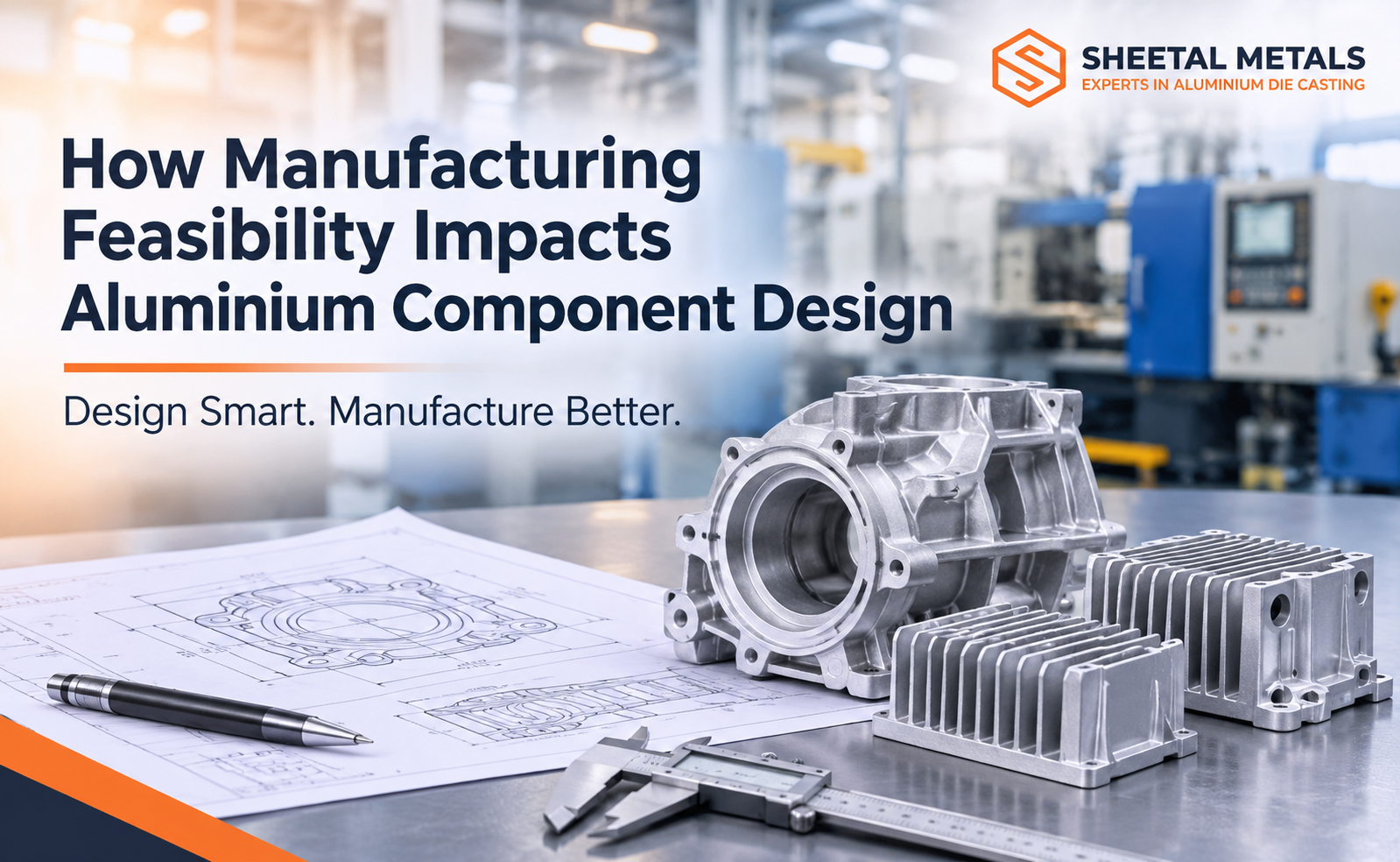
A good aluminium component must do more than meet design requirements. It must also be easy to manufacture, affordable, and reliable.
Manufacturing feasibility helps engineers make better design decisions. It checks whether a component can be made using the right tools, materials, and processes.
For OEMs, this step is important before production begins. A small design problem can lead to costly changes later. Early planning can help reduce production delays, tooling costs, material waste, and machining work.
What Is Manufacturing Feasibility?
Manufacturing feasibility checks whether a component can be made without unnecessary problems.
Engineers review the shape, size, material, wall thickness, and machining needs. They also check how the component will be cast, finished, and inspected.
A design may look correct on a computer. However, it may be difficult to produce on the factory floor. This is why engineers must consider manufacturing needs during the design stage.
1. Keep the Component Design Simple
The shape of a component affects the entire casting process. Deep cavities, sharp corners, and complex shapes can make production difficult.
These features can affect how molten aluminium fills the die. They can also create problems during cooling, casting removal, and machining.
Engineers should review every feature before finalising the design. Removing unnecessary details can make the component easier to produce.
A simpler design can reduce tooling work and production problems. It can also help maintain consistent quality across batches.
2. Maintain Proper Wall Thickness
Wall thickness affects how aluminium fills and cools inside the die. Uneven thickness can cause different cooling rates across the component.
Thick sections may take longer to cool. This can increase the risk of shrinkage, surface defects, and size changes.
Engineers should try to maintain a uniform wall thickness. Smooth changes between thick and thin areas can help improve the casting process.
Removing extra material can also reduce component weight. However, the component must still meet its strength and performance needs.
3. Provide Suitable Draft Angles
Draft angles help remove a component from the die after casting. They reduce friction between the component and die walls.
Without a proper draft, a component may become difficult to remove. This can damage its surface or slow down production.
Engineers should include appropriate draft angles on walls, ribs, and other features. The required angle depends on the component shape and surface finish.
A proper draft helps with easier component removal. It can also reduce damage and support smoother production.
4. Avoid Unnecessary Tooling Complexity
Component design affects the shape and structure of the casting die. Deep cavities, undercuts, and complex features can make die construction difficult.
Such designs may need extra slides, special parts, and more machining. These changes can increase tooling costs and development time.
OEMs should review complex features before approving the design. Removing unnecessary details can make the die easier to build and maintain.
A practical design can also support faster production. It may reduce maintenance needs and improve long-term cost control.
5. Plan Machining Requirements Carefully
Many aluminium die-cast parts need machining after casting. CNC machining helps achieve accurate sizes, flat surfaces, holes, and mounting points.
However, very tight tolerances can increase machining costs. They may also require more inspection and extra production time.
Engineers should identify which dimensions are important for component function. These areas may need tighter tolerances and more accurate machining.
Other surfaces may not need the same level of accuracy. Setting practical tolerances can help save time and cost.
6. Select the Right Aluminium Alloy
The choice of aluminium alloy affects the final component. It can influence strength, casting quality, machining, and performance.
Different applications need different material properties. For example, motor housings, lighting parts, and automotive components face different operating conditions.
Engineers should consider heat, load, moisture, and the working environment. They should also check whether the selected alloy suits the casting process.
The right material can help the component meet its purpose. It can also support better and more reliable production.
7. Consider Finishing and Assembly
Casting is only one stage of component manufacturing. Many parts need extra work before they are ready for use.
This work may include CNC machining, shot blasting, powder coating, drilling, tapping, or assembly.
Engineers should plan these steps during the design stage. Mounting points, holes, coating areas, and assembly surfaces must be placed carefully.
Early planning can prevent problems during later production. It also helps keep the complete manufacturing process organised.
8. Involve the Manufacturer at an Early Stage
Early discussions with the manufacturer can improve component design. They help engineers identify problems before production starts.
The manufacturer can review drawings and suggest practical changes. This may include changes to wall thickness, tooling, machining, or material selection.
These discussions can also help set clear production requirements. As a result, teams can avoid unnecessary design changes and delays.
Working together from the start can make component development smoother. It can also help prepare the design for regular production.
How Sheetal Metals Supports Aluminium Component Manufacturing
Sheetal Metals provides aluminium die casting and precision manufacturing services. Our capabilities cover several stages of component production.
These include product design support, die design, pressure die casting, CNC machining, shot blasting, powder coating, and inspection.
We review component requirements to understand the design and production needs. This helps us plan suitable manufacturing steps for each project.
Sheetal Metals serves the automotive, EV, lighting, electronics, solar, pumping, and industrial sectors.
Our team works with customer drawings and specifications. We help businesses plan their aluminium component requirements with a practical manufacturing approach.
Conclusion
Manufacturing feasibility helps engineers make better component design decisions. It checks whether a design is practical before production begins.
Simple shapes, proper wall thickness, suitable draft, and clear machining needs can make manufacturing easier.
Choosing the right material and planning finishing work are also important. These steps can help reduce costs, avoid delays, and improve component quality.
Planning a new aluminium component? Contact Sheetal Metals to discuss your drawings, design requirements, and manufacturing needs. Our team can help you plan the next steps for your project.
📅 Last updated: